
Thin, earthy lines running up a wall are easy to ignore, but termite mud tubes are one of the clearest signs that termites are already inside your home. Termites build these tubes to travel from the soil to the wood they eat. If you have spotted them in your Lahore home, this guide explains what they mean and how termite control stops the damage.
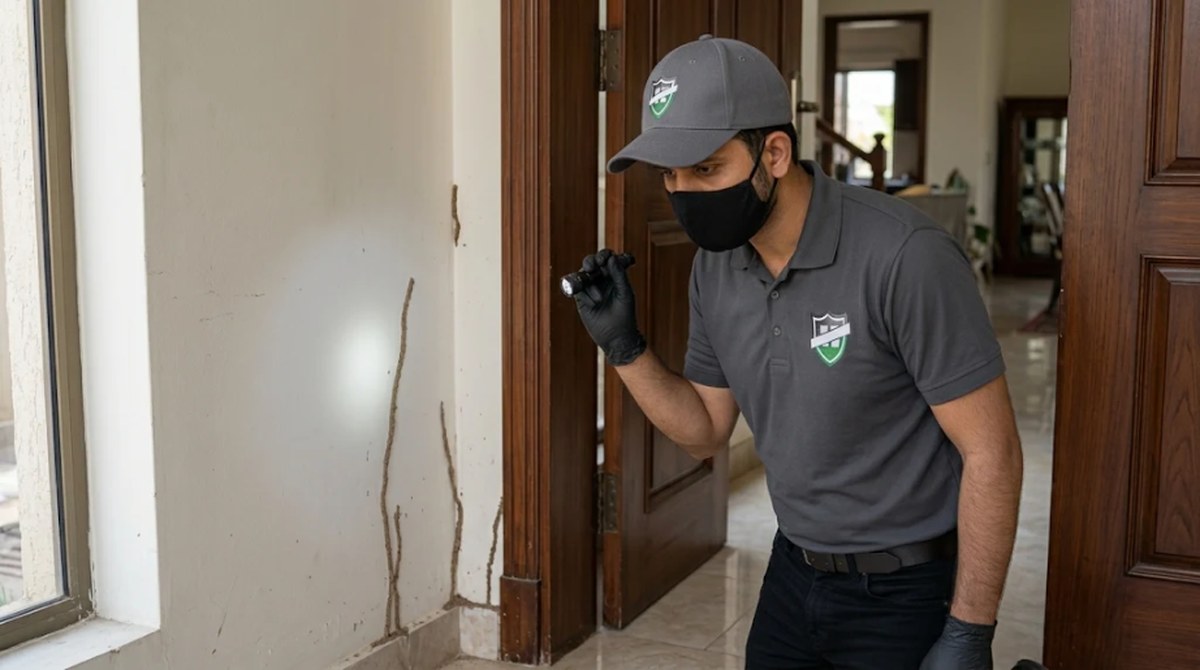
What Are Termite Mud Tubes?
Termite mud tubes are thin tunnels made of soil, wood particles and saliva. Termites use them as covered roads between the ground and the wood inside your house.
Subterranean termites, the most common type in Pakistan, live in the soil under and around buildings. They cannot survive in open air because they dry out quickly. So they build narrow tubes, usually about the width of a pencil, along concrete walls, plinths, pillars and pipes. These tubes keep them hidden and moist while they travel to door frames, built-in almirahs and kitchen cabinets.
Termites cannot eat concrete. The tubes simply pass over it to reach wood. When you see a mud tube on a wall, the real damage is usually happening inside the nearest wooden frame or cabinet.
How to Identify Mud Tubes on Walls
Real termite tubes are thin, dull and earthy in colour. They often start near the floor or skirting and run up toward a door, window or cabinet.
Check these places in your home:
- Lower walls near the floor, especially behind furniture
- Plinth level outside the house and around the boundary wall
- Corners near door frames (chaukhat) and window frames
- Walls behind built-in wardrobes and kitchen cabinets
- Around water pipes, electric conduits and wall cracks
- Basements, stairs and store rooms that stay damp
Do not confuse mud tubes with other wall marks. Seepage leaves damp patches and salt stains, not raised lines. Mud wasp nests are short, round and stuck in one place, while termite tubes are long, narrow and follow a path from the floor upward. Spider webs with dust can look similar from far, but they are soft and fall apart, while mud tubes are firm and gritty. Some tubes also hang down from the ceiling or bridge across a gap; these are called drop tubes and are just as serious.
In Lahore, mud tubes appear most often after the monsoon and in early spring, when the soil is moist and colonies are growing. Ground-floor rooms with damp walls, homes near the canal belt and houses with old wooden doors and almirahs are the most at risk. Even in winter, termites stay active below the soil and inside warm walls, so tubes can appear at any time of year.
A simple test: break a small piece of the tube. If you see small creamy-white termites moving inside, the colony is active. If the tube is dry and empty, termites may have moved to a new route, which still needs termite treatment.
Why Mud Tubes Mean Hidden Damage
Mud tubes show termites are reaching wood somewhere nearby. By the time tubes are visible, wood inside frames and cabinets may already be hollow.
Termites eat wood from the inside out, leaving a thin outer layer. A door frame can look normal but sound hollow when tapped. Wardrobes are usually attacked from the inner frame and back panel first, so the damage stays hidden until shelves loosen. Lahore’s mix of older houses, damp ground floors and new construction gives termites steady access to building wood.
Look out for these signs that often come with mud tubes: hollow sound when you tap a door frame, small holes or powdery soil on cabinet shelves, doors and windows that suddenly become tight, paint bubbling on wooden surfaces and tiny wings near windows after rain. If you see mud tubes along with any of these, the infestation has already reached the wood.
Scraping the tubes off the wall does not solve the problem. Termites rebuild them within days, often in a new spot. Only proper termite control treatment at the soil and wood level stops the colony.
How Professional Termite Control Treats the Problem
Our termite pest control services treat the soil line along walls and the affected woodwork, so termites cannot reach the house and the wood is protected.
1. Inspection. A technician traces every mud tube, taps door frames and checks wardrobes and kitchen cabinets to map where termites are active.
2. Soil barrier along walls. Small holes are drilled into the floor along the walls, and termiticide is injected to create a protective barrier in the soil underneath. Holes are then filled neatly to match the floor.
3. Wood treatment. Affected door frames, almirahs and cabinets are injected and sprayed with termiticide so termites inside the wood are controlled.
4. Follow-up and warranty. We check results after treatment and provide a written warranty, so you know what is covered.
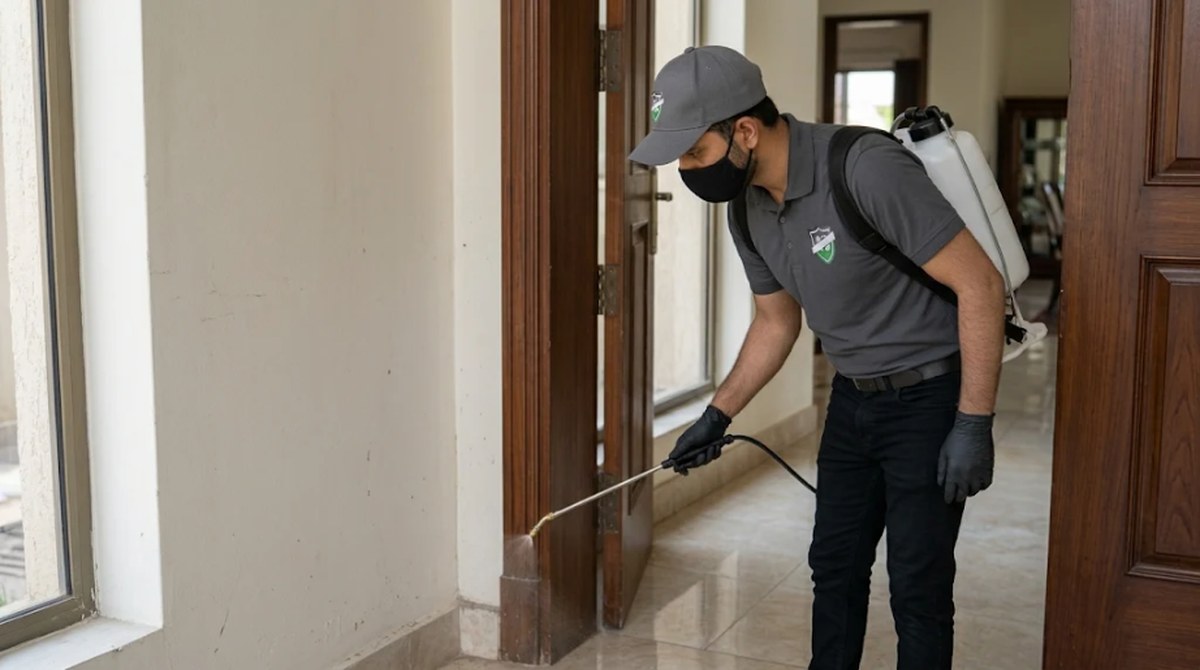
This full termite extermination service is what stops mud tubes from coming back. It is also known locally as deemak control in lahore.
What to Do When You Find Mud Tubes
Do not panic and do not break all the tubes. A few careful steps help the technician find the colony faster.
- Take photos of the tubes before touching them
- Note which rooms and walls have them
- Move furniture slightly away from affected walls
- Avoid market sprays, which only push termites deeper into the wood
- Book an inspection as soon as possible
If you are searching for termite treatment near me, choose a company that inspects first, explains the method and gives a warranty. Ask which areas will be treated, how the drilled holes will be finished, how long the family should stay out of treated rooms and what happens if termites return. A good provider of termite control services near me answers these questions clearly before starting any work.
Termite Control in Lahore by HomeAdvisor
HomeAdvisor provides termite control services for homes, flats and commercial buildings in Lahore, Islamabad, Rawalpindi and Karachi with trained technicians.
For termite control in lahore, visit our Termite Control Services in Lahore page. Building a new house? Read our guide on pre-construction termite treatment.
FAQs
1. Are termite mud tubes always a sign of active termites?
Not always, but they always mean termites have been there. Break a small piece: live termites inside mean active infestation. Empty tubes still need inspection.
2. Can termites damage concrete walls?
No. Termites cannot eat concrete. Termite mud tubes only pass over concrete to reach door frames, cabinets and other building wood.
3. Should I remove mud tubes myself?
You can, but termites will rebuild them within days. Removing tubes does not stop the colony; professional termite treatment does.
4. How long does termite control take for a house?
Most homes take one to two days, depending on size and how many rooms are affected. Your technician will confirm after inspection.
5. Is there termite treatment near me in Lahore?
Yes. HomeAdvisor’s termite control services cover all areas of Lahore, including DHA, Bahria Town, Gulberg, Johar Town and older city areas.
6. Do you give a warranty on termite pest control services?
Yes. Every treatment comes with a written warranty, and follow-up visits are included if termites return during the warranty period.
Book a Termite Inspection Today
Mud tubes on your walls are a warning you should not ignore. Call or WhatsApp HomeAdvisor, or fill in the form, to book a termite inspection in Lahore.