
A damp patch on the ceiling under your terrace, paint peeling in the room below the balcony, or water standing for hours after rain: these are signs your terrace or balcony is no longer sealed. Terrace waterproofing is one of the most important jobs for homes in Islamabad, where heavy monsoon rain, hot summers and cold winter nights put open slabs under constant stress. This guide explains why terraces leak, what a proper treatment includes, and how professional waterproofing services in Islamabad keep the rooms below dry.
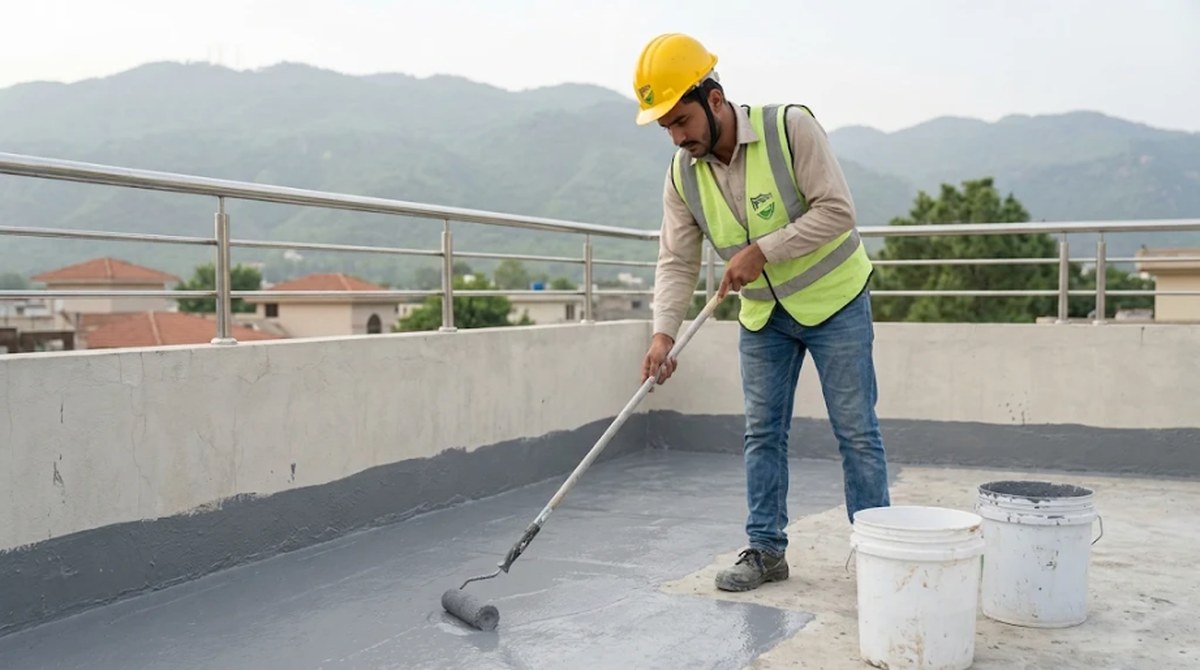
Why Terraces and Balconies Start Leaking
Terraces and balconies sit open to rain and sun all year. Heat, cold, poor slope and blocked drains slowly crack the surface, and water finds its way into the rooms below.
An open terrace faces more stress than almost any other part of a house. In summer the slab heats up and expands; in winter nights it cools and contracts. Over time this movement opens fine cracks in tiles, grout and plaster. During the Islamabad monsoon, heavy rain then pushes water into these cracks.
Other common causes include:
- Poor slope, so water stands instead of flowing to the drain
- Blocked or badly sealed drain outlets
- Broken or hollow tiles with open grout lines
- Weak joints where the floor meets the parapet wall or the door frame
- Railing and grill fixings drilled into the slab without sealing
Upper portions in Bahria Enclave, DHA, Park View City and the F and E sectors often have terraces built directly over bedrooms, so even a small leak quickly shows on the ceiling below.
Signs You Need Terrace Waterproofing
Ceiling damp patches, peeling paint, white salt marks, mould smell and standing water after rain all point to a failing terrace. Treating early prevents damage to steel and plaster.
Watch for these signs:
- Damp patches or stains on the ceiling under the terrace or balcony
- Paint bubbling or peeling, and white salt marks on walls below
- Water standing on the terrace for hours after rain
- Cracked or loose tiles and missing grout
- Musty smell or black fungus in the room below
- Rust stains on the ceiling, a sign water has reached the steel
If you see any of these, plan roof waterproofing treatment before the next rainy season. Water that reaches the steel bars can cause rust and concrete spalling, which costs far more to repair.
Terrace, Roof and Basement: Different Problems
A terrace is a walking surface with tiles, a roof is often bare, and a basement fights water from the soil. Each needs its own method, so one product does not fit all.
Many homeowners treat every leak the same way, which is why repairs fail. A main roof is usually an exposed slab that needs a coating designed for full sun. A terrace or balcony is a walking area with tiles, railings and doors, so the waterproofing layer must sit under or work with the tiles. Basement waterproofing and foundation waterproofing deal with water pressure from the soil, which needs a completely different approach.
A good contractor inspects first, finds where the water actually enters, and then chooses the right system. That is the difference between a patch that fails in one season and roof waterproofing services that last for years.
How Professional Terrace Waterproofing Works
A proper job includes inspection, surface preparation, crack and joint repair, drain sealing, a flexible waterproof coating and a water test. Skipping any step usually means the leak returns.
HomeAdvisor’s team follows a step-by-step process:
- Inspection: We check the slope, drains, tiles, parapet joints and the ceiling below to find the real source of the leak.
- Surface preparation: Loose tiles, broken grout and weak plaster are removed or repaired, and the surface is cleaned of dust and fungus.
- Crack and joint repair: Cracks are opened and filled, and the corner where the floor meets the parapet wall is sealed with a rounded joint so water cannot sit there.
- Drain outlet sealing: Drain pipes are sealed into the slab, a common source of leaks.
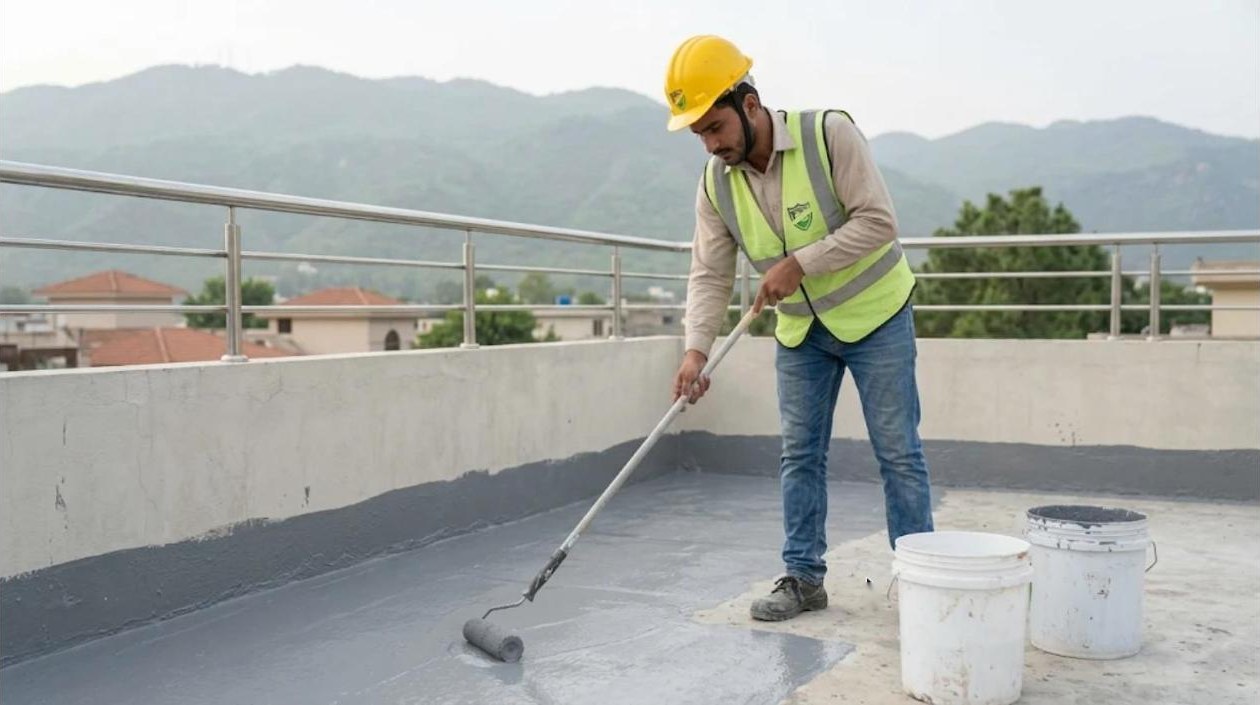
- Waterproof coating: A flexible cementitious waterproofing coating or membrane is applied in layers, turned up the parapet walls and around door thresholds.
- Water test: Water is held on the surface to confirm there is no leak before tiles or a protective layer go on top.
For balconies, the same steps apply, with extra care around railing fixings and the door frame, where most balcony leaks begin.
Choosing the Right Waterproofing Contractor
Pick a contractor who inspects before quoting, explains the method, tests the work and gives a written warranty. Cheap patchwork usually costs more in the long run.
When you search for roof waterproofing near me, compare more than the quote. Ask:
- Do they inspect the terrace and the ceiling below before suggesting a method?
- Which system will they use, and why does it suit your terrace?
- Will they repair cracks, joints and drain outlets, or only coat the surface?
- Do they water-test the work before closing it?
- Is there a written warranty?
HomeAdvisor’s waterproofing services team answers all of these before starting work, so you know exactly what is being done to your home.
Keeping Your Terrace Dry After Treatment
Clean drains before the monsoon, avoid drilling into the treated slab, fix broken tiles quickly and check the ceiling below once a year. Small care keeps the waterproofing working longer.
After roof waterproofing, simple maintenance protects your investment:
- Clean terrace and balcony drains before the monsoon and after storms
- Do not drill new holes for railings, solar stands or water tanks without sealing them
- Replace broken tiles and missing grout quickly
- Do not let plants in pots sit directly on the floor with water collecting underneath
- Check the ceiling below once a year, especially after the rainy season
If you are adding a room, solar panels or a water tank on the terrace later, ask your waterproofing contractor before the work starts so the treated layer is not damaged.
Frequently Asked Questions
1. What is terrace waterproofing?
Terrace waterproofing is the process of sealing an open terrace or balcony slab so rainwater cannot seep into the rooms below. It includes repairs, a waterproof layer and a water test.
2. Can terrace waterproofing be done without removing tiles?
Sometimes. If tiles are sound, a coating can be applied over them with joint sealing. If tiles are hollow or broken, they need to be removed for a lasting result.
3. When is the best time for terrace waterproofing in Islamabad?
Dry months from October to May are best. Getting it done before the monsoon gives the coating time to cure fully.
4. Why does my balcony leak only during heavy rain?
Heavy rain fills the balcony faster than the drain can clear it, and water enters through weak joints, railing holes or the door threshold.
5. Is cementitious waterproofing good for terraces?
Yes. A flexible cementitious waterproofing coating works well under tiles and on walking surfaces. Your contractor should confirm the right system after inspection.
6. Do you provide waterproofing services in Islamabad and Lahore?
Yes. HomeAdvisor provides waterproofing services in Islamabad, Rawalpindi and Lahore for terraces, balconies, roofs, bathrooms and water tanks.
Book Terrace Waterproofing in Islamabad Today
Seeing damp patches under your terrace or balcony? Fix the source before the next rain. HomeAdvisor’s team inspects, repairs and waterproofs terraces and balconies across Islamabad. Learn more about our waterproofing services in Islamabad.
Call: 0300 8503029 | WhatsApp: Chat with us | Or fill in the contact form to book an inspection.




One Response