The kitchen is the wettest room in most Pakistani homes. Water is used for hours every day for washing utensils, cleaning floors, soaking vegetables and filling the water filter, and much of it finds its way into joints you never see. When the floor has no proper protection, that water slowly soaks into the slab under the tiles. Months later it shows up as a damp patch on the ceiling of the room below, swollen cabinet bases or loose, hollow-sounding tiles. Kitchen waterproofing protects the floor and walls before that happens. This guide explains where hidden kitchen leaks start, how to spot them early, and how professional waterproofing fixes them in homes across Islamabad and Rawalpindi.
Why Kitchens Leak More Than Other Rooms
Kitchens combine daily water use, many pipe joints and heavy cleaning. Without a waterproof layer under the tiles, water seeps through grout lines and pipe openings into the slab and walls.
In a typical kitchen there are at least four places where water meets a joint: the sink outlet, the wash-basin trap, the floor drain and the tile grout around the cooking range. Many homes in Islamabad also have a washing area or a dishwasher connection near the kitchen, adding more pipes. Pakistani cooking adds its own pressure: floors are washed with plenty of water every day, often with a wiper pushing water to one corner. If the builder laid tiles straight on the concrete without a waterproof coat, every wash sends a little water into the slab. Over years, that adds up to serious seepage that no amount of tile cement on the surface can stop.
Warning Signs of a Hidden Kitchen Leak
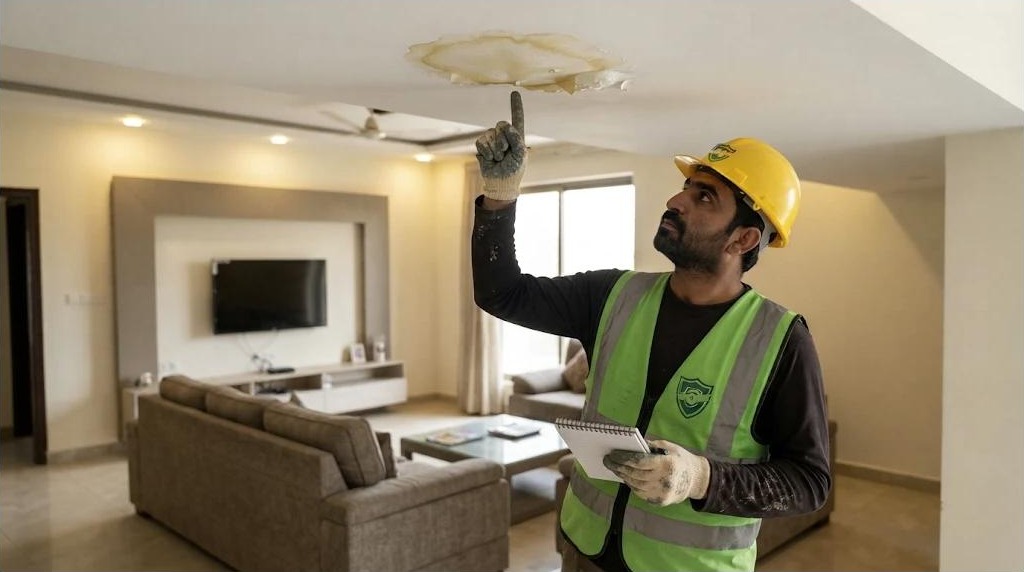
Look for damp patches on the ceiling below, swollen cabinet bases, loose or hollow tiles, dark grout lines, a musty smell and paint bubbling near the floor. Each one points to water trapped under the floor.
Hidden leaks rarely announce themselves. Check for these signs:
- Ceiling stains in the room below. In double-storey houses and flats, a yellow or brown patch directly under the kitchen is the most common clue.
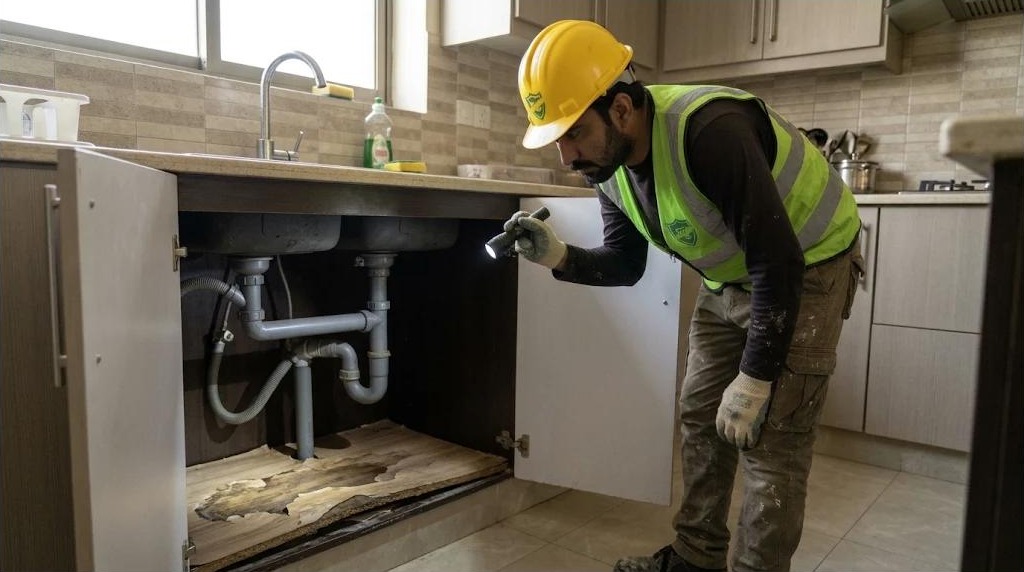
- Swollen or soft cabinet bases. The bottom panel of the sink cabinet absorbs moisture first, swells and starts peeling.
- Hollow-sounding tiles. Tap the floor with a key; a dull, hollow sound means the tile has lost its bond because water has collected below it.
- Dark, crumbling grout. Grout that stays dark long after mopping is holding water.
- Paint peeling at the base of walls. Water climbs into the wall plaster from the floor and pushes the paint off.
- A musty smell from the cabinets. Damp wood and trapped water give a stale odour even in a clean kitchen.
If you notice two or more of these, the kitchen floor needs inspection, not just a fresh coat of grout.
Where Kitchen Water Actually Escapes
Most kitchen leaks come from four points: the sink drain and trap, the floor trap, wall-floor corners, and pipe openings through the slab. Fixing only the visible spot leaves the real source active.
A waterproofing specialist starts by finding the path of the water, not just its end point. The usual culprits are:
- Sink outlet and trap: a cracked pipe collar or a loose joint drips straight into the cabinet base and then into the floor.
- Floor drain (nali): if the drain body is not sealed to the slab, mopping water runs around it instead of into it.
- Wall-floor corners: the joint between wall and floor is where most cracks open, because the two surfaces move differently.
- Pipe sleeves through the slab: gaps around water and gas pipes act as small channels into the floor below.
Sometimes the problem is not the kitchen at all. In a top-floor kitchen, a stain on the kitchen ceiling usually comes from the roof above, and that calls for roof waterproofing or a proper roof leakage solution rather than floor repair. A good inspection separates the two, so you pay for the right fix.
How Professional Kitchen Waterproofing Works
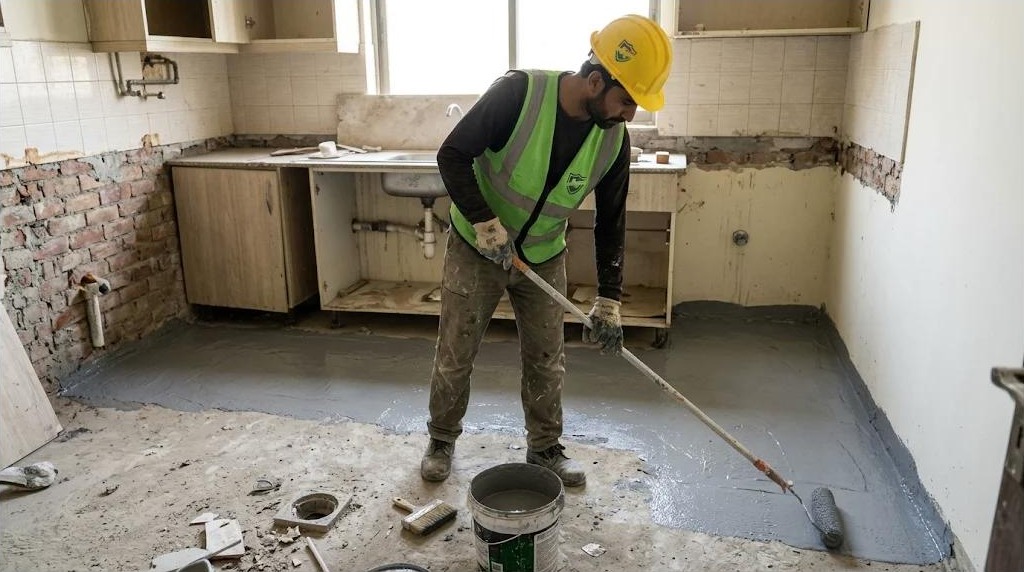
A professional team inspects first, opens damaged tile joints, seals pipe openings, applies a waterproof coat to the floor and lower walls, tests with water, then restores the tiles. Each step closes one path for seepage.
Our team at HomeAdvisor follows a clear process for kitchen waterproofing:
- Inspection and leak tracing: we check the ceiling below, the cabinets and the floor, and test pipes to confirm the source.
- Opening the weak areas: loose tiles, cracked grout and damaged corners around the sink and drain are opened carefully.
- Sealing joints and pipes: gaps around the floor drain, sink outlet and pipe sleeves are filled and sealed.
- Waterproof coating: a flexible waterproof coat is applied over the floor and turned up the walls, with extra layers at corners and around the drain.
- Water test: the floor is flooded for a set time to confirm there is no leak below before tiling.
- Tile restoration: tiles are re-fixed and grouted neatly so the kitchen looks finished and is ready to use.
For small leaks, a targeted seepage treatment around the sink and drain may be enough. For older kitchens with widespread hollow tiles, a full floor treatment is usually the lasting option. Either way, the decision should come from inspection, not guesswork.
Mistakes That Make Kitchen Leaks Worse
Filling grout again on top, painting over damp patches, using silicone alone around the drain and ignoring a dripping trap only hide the problem. Water keeps spreading underneath until the damage is serious.
We often visit kitchens where three or four quick fixes have already been tried. Common mistakes include:
- Re-grouting over wet joints, which traps water instead of stopping it.
- Painting the ceiling below without fixing the kitchen floor, so the stain returns within weeks.
- Relying on a bead of silicone around the drain, which peels off after a few months of daily mopping.
- Ignoring a slow drip under the sink because it looks minor.
Like a chhat leakage solution that only patches the roof surface, these quick fixes look fine for a while and then fail. Real waterproofing closes the water path at its source.
Kitchen Waterproofing During Renovation
If you are renovating your kitchen, apply waterproofing before new tiles and cabinets go in. It is the easiest time to protect the floor and lower walls completely.
A renovation is the best opportunity to get waterproofing right. Once old tiles are removed, the slab and pipe openings are exposed, and the waterproof coat can cover every corner without damaging new work later. We recommend coating the full kitchen floor, turning it up at least a foot on the walls, and taking it higher behind the sink. Ask your contractor to leave time for a water test before tiling. In Islamabad’s newer flats and houses, we also see many kitchens moved during renovation, with new pipes running through old floors. Those new openings need the same care. You can read more about protecting open areas in our terrace and balcony waterproofing guide.
Frequently Asked Questions
1. What is kitchen waterproofing?
Kitchen waterproofing is a protective layer applied to the kitchen floor and lower walls, under the tiles, so that water from washing, mopping and pipes cannot seep into the slab or the room below.
2. How do I know if my kitchen floor is leaking?
Look for damp patches on the ceiling below, hollow-sounding tiles, swollen cabinet bases and paint peeling near the floor. These are the most common signs of hidden kitchen seepage.
3. Can kitchen waterproofing be done without removing all tiles?
Sometimes. If the leak is limited to the sink or drain area, a targeted seepage treatment may work. Widespread damage usually needs the tiles lifted for a lasting fix.
4. Why is there a stain on my top-floor kitchen ceiling?
In a top-floor kitchen, ceiling stains usually come from the roof. In that case you need roof waterproofing services, not floor repair. An inspection confirms the real source.
5. How do I find a reliable waterproofing service near me?
When searching for waterproofing near me, choose a team that inspects first, explains the cause, tests with water before tiling and gives clear after-care advice.
6. Do you provide waterproofing services in Islamabad and Rawalpindi?
Yes. HomeAdvisor offers waterproofing services in Islamabad, Rawalpindi and Lahore for kitchens, bathrooms, roofs, terraces and water tanks.
Stop Hidden Kitchen Leaks Today
A small leak under your kitchen floor can damage cabinets, ceilings and wiring if it is left alone. HomeAdvisor’s team will inspect your kitchen, trace the source and recommend the right fix. Explore our waterproofing services in Islamabad, then call us, message us on WhatsApp or fill in the form to book your inspection.