Dengue Prevention: What Every Pakistan Household Needs
Dengue fever spreads through mosquito control the entire country needs to take seriously every year, especially once the monsoon ends and mosquito breeding conditions peak across Pakistan. Every household should know the early symptoms of dengue, how the mosquito that carries it actually breeds, and what prevention steps genuinely reduce risk — not just during an outbreak, but as an ongoing habit.
This guide covers what to watch for, how dengue spreads at home, and the practical steps that make the biggest difference.
What Is Dengue Fever?
Dengue fever is a viral infection spread by the bite of an infected Aedes mosquito — commonly known as the dengue mosquito. Unlike many other mosquitoes, the Aedes mosquito is most active during the day, particularly in the early morning and late afternoon, and breeds in small amounts of clean, stagnant water rather than dirty drains.
This is one of the most misunderstood facts about dengue: people often assume mosquito nets at night and evening spraying are enough, but because the dengue mosquito bites during the day, daytime prevention matters just as much.
Early Symptoms of Dengue Fever
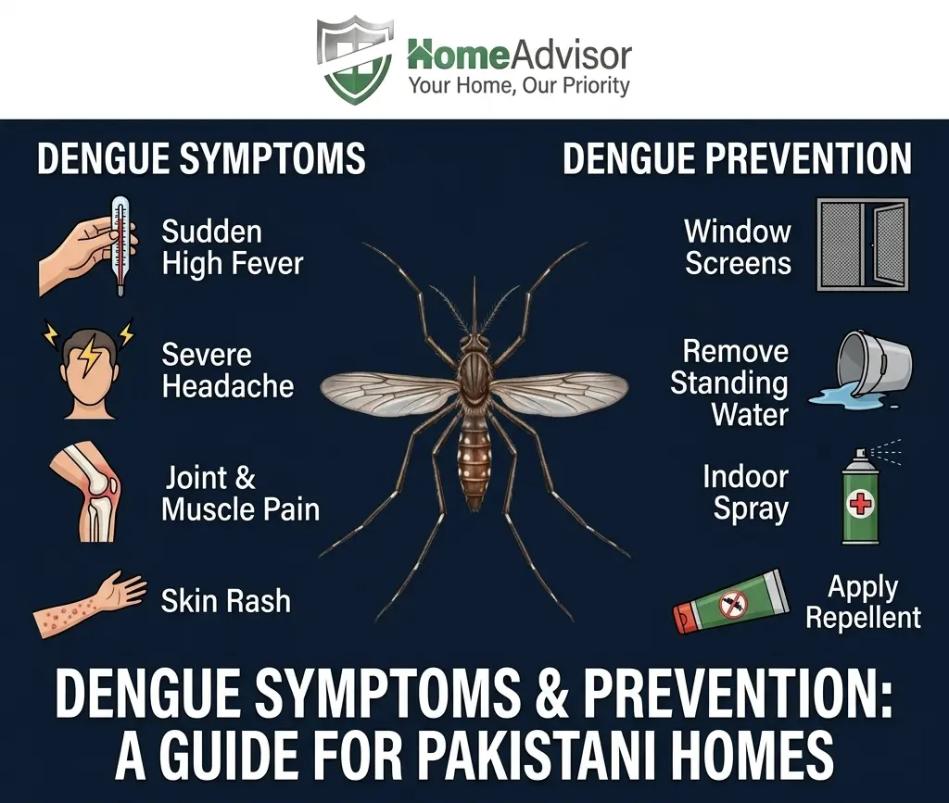
Dengue symptoms typically appear four to ten days after a bite and can range from mild to severe. The most common early symptoms include:
- Sudden high fever, often 104°F (40°C) or higher
- Severe headache, particularly behind the eyes
- Joint and muscle pain — sometimes called “breakbone fever” because of how intense it can feel
- Skin rash, usually appearing a few days after the fever starts
- Nausea and vomiting
- Fatigue and general weakness
- Mild bleeding, such as nosebleeds or bleeding gums
Most people recover within one to two weeks with rest, fluids, and monitoring. However, a smaller number of cases can progress to severe dengue, which requires immediate medical attention.
Warning Signs That Need Urgent Medical Care
If any of the following appear, especially as the fever starts to come down, seek medical help right away:
- Severe abdominal pain or persistent vomiting
- Bleeding from the nose, gums, or in vomit/stool
- Difficulty breathing
- Extreme fatigue, restlessness, or confusion
- Cold, clammy skin
These warning signs typically appear 24 to 48 hours after the fever breaks, which is why monitoring shouldn’t stop just because the fever seems to be improving.
This article is for general awareness only and isn’t a substitute for medical advice. If you or a family member shows dengue symptoms, consult a doctor for proper diagnosis and care.
How Dengue Mosquitoes Breed Around Your Home
Understanding dengue prevention starts with understanding how the Aedes mosquito actually breeds. Unlike common household mosquitoes, it doesn’t need much water — even a bottle cap’s worth is enough for eggs to hatch within a week.
Common breeding spots found in and around Pakistani homes include:
- Water storage containers, tanks, and drums without tight-fitting lids
- Flower pot saucers and plant trays
- Old tyres, buckets, and discarded containers that collect rainwater
- Clogged gutters and rooftop drains
- Air conditioner drip trays and water coolers
- Unused swimming pools or ponds without proper maintenance
Because the mosquito breeds in clean, still water rather than dirty water, many households overlook these spots simply because the water “looks fine.”
Dengue Prevention: What Actually Works
Dengue prevention comes down to two things working together: removing breeding sites and reducing mosquito bites. Neither alone is fully effective — a home can be sprayed regularly and still have mosquitoes breeding in a neglected flower pot just outside.
1. Eliminate Standing Water Weekly
This is the single most effective step against dengue. Check and empty:
- Flower pot saucers and trays
- Buckets, drums, and water storage containers
- Gutters and rooftop drains
- AC trays and coolers
Doing this once a week breaks the mosquito’s breeding cycle before eggs can hatch.
2. Cover and Seal Water Storage
Water tanks and drums should have tightly fitting lids at all times. Even a small gap is enough for a mosquito to lay eggs inside.
3. Use Mosquito Nets and Screens
Since the dengue mosquito bites during the day, mosquito nets on beds help less than window and door screens that keep mosquitoes out of the house entirely during daylight hours.
4. Wear Protective Clothing During Peak Hours
Early morning and late afternoon are peak biting times. Long sleeves and full-length trousers reduce exposed skin during these hours, particularly for children playing outdoors.
5. Use Repellents on Exposed Skin
Mosquito repellents applied to exposed skin add another layer of protection, especially for outdoor activity during the day.
6. Schedule Regular Mosquito Spraying and Fumigation
Indoor and outdoor mosquito spraying reduces the adult mosquito population, while fumigation reaches corners, drains, and vegetation that a hand spray can’t cover. During dengue season, scheduling this every few weeks — rather than waiting for mosquitoes to become a visible problem — offers much better protection.
7. Clean the Neighborhood, Not Just Your Home
Dengue mosquitoes don’t respect property lines. A clean home next to a neglected plot with standing water still carries risk. Community-level cleanups and cooperation with neighbors make individual prevention efforts far more effective.
Who Is Most at Risk?
While anyone can contract dengue, certain groups face a higher risk of complications:
- Young children and infants
- Elderly individuals
- People with weakened immune systems
- Those who have had dengue before (a second infection can be more severe)
Households with these individuals should be especially consistent with prevention steps during peak dengue months.
When Prevention Isn’t Enough: Professional Support
Even with regular water checks and home spraying, larger properties, gardens, or areas near stagnant water sources often need more than DIY efforts. This is where professional mosquito control services make a real difference — inspecting the property for hidden breeding spots, treating both indoor and outdoor areas, and offering fumigation for wider coverage than a household spray can achieve.
Communities and households that combine personal prevention habits with periodic professional treatment consistently see fewer mosquito problems throughout dengue season.
Frequently Asked Questions
Q1: What are the first symptoms of dengue fever?
The earliest dengue symptoms are usually a sudden high fever, severe headache (especially behind the eyes), joint and muscle pain, and fatigue. A skin rash often follows a few days later. If these symptoms appear, especially during dengue season, it’s best to consult a doctor promptly.
Q2: How can I prevent dengue mosquitoes from breeding at home?
The most effective dengue prevention step is removing standing water weekly — from flower pot saucers, buckets, gutters, and water storage containers — since the dengue mosquito breeds in small amounts of clean, still water. Covering water tanks tightly and using window screens also helps reduce risk significantly.
Q3: Does regular mosquito spraying protect against dengue?
Regular mosquito spraying reduces the adult mosquito population and lowers your risk of bites, but it works best alongside breeding-site removal. For homes with gardens or larger outdoor areas, mosquito fumigation reaches spots a hand spray can’t, offering more complete protection during dengue season.
Protect Your Home This Dengue Season
Dengue prevention works best as a habit, not a one-time effort. Along with weekly water checks and daily precautions, scheduled professional treatment adds an extra layer of protection your home and family can rely on. Contact us by visiting https://homeadvisor.com.pk/ for mosquito spraying to hire solve this issue.